
Sunday Reflection
AARAI Horizons >> News & Updates>> Sunday ReflectionSunday Reflection
Education in the Age of Artificial Intelligence: Are We Still Teaching Students How to Think?
Artificial intelligence has entered our classrooms, lecture halls, and study spaces. Whether we welcome it or resist it, it is here to stay. Students are using it to answer questions, summarise books, write essays, generate presentations, and solve problems in seconds. The question is no longer whether AI should be part of education. The real question is what kind of education we want in an age where answers are always a click away.
For generations, education has rewarded students for remembering information. We tested how much they could recall, how quickly they could reproduce facts, and how accurately they could repeat what they had learned. Yet today, information is no longer scarce. It is everywhere. If knowledge is now readily available, perhaps our greatest educational challenge is no longer teaching students what to think, but helping them learn how to think.
This shift should make us uncomfortable because it requires us to rethink many of the assumptions on which our education systems have been built.
If an assignment can be completed almost entirely by artificial intelligence, we should ask whether the assignment is truly measuring learning. If an examination rewards memorisation more than reasoning, are we preparing students for the world they are entering or the world that no longer exists?
Artificial intelligence is not making education obsolete. It is exposing weaknesses that have existed for a long time. It is revealing where learning has become mechanical rather than meaningful. It is challenging educators to create learning experiences that require curiosity, creativity, ethical judgement, collaboration, and critical thinking. These are qualities that cannot simply be generated by a machine.
This also places a responsibility on students. AI can be an extraordinary learning partner, but it can also become a crutch. There is a difference between using artificial intelligence to deepen understanding and using it to avoid the effort that genuine learning requires. Growth still comes from wrestling with difficult ideas, asking better questions, making mistakes, and reflecting on what we have learned.
Perhaps the greatest risk is not that artificial intelligence will replace teachers. The greater risk is that we become satisfied with quick answers and stop asking deeper questions. Education loses its purpose the moment we value convenience more than understanding.
The future of education will not be decided by technology alone. It will be shaped by the choices educators, students, institutions, and policymakers make today. Artificial intelligence should encourage us to redesign education around inquiry rather than memorisation, understanding rather than repetition, and lifelong learning rather than passing examinations.
At AARAI Horizons, we believe that the true measure of education is not how much information a student can reproduce, but how thoughtfully they can question, analyse, create, and contribute to society. In the age of artificial intelligence, those qualities matter more than ever.
Sunday Reflection
If artificial intelligence can provide answers in seconds, what should education focus on teaching in the years ahead? Perhaps this is one of the most important conversations our generation needs to have.
4 thoughts on “Sunday Reflection”
Leave a Reply
Related Post

AI & Digital Learning
Artificial Intelligence Will Not Replace Learning. Passive Learning Will. Artificial intelligence has changed the way…
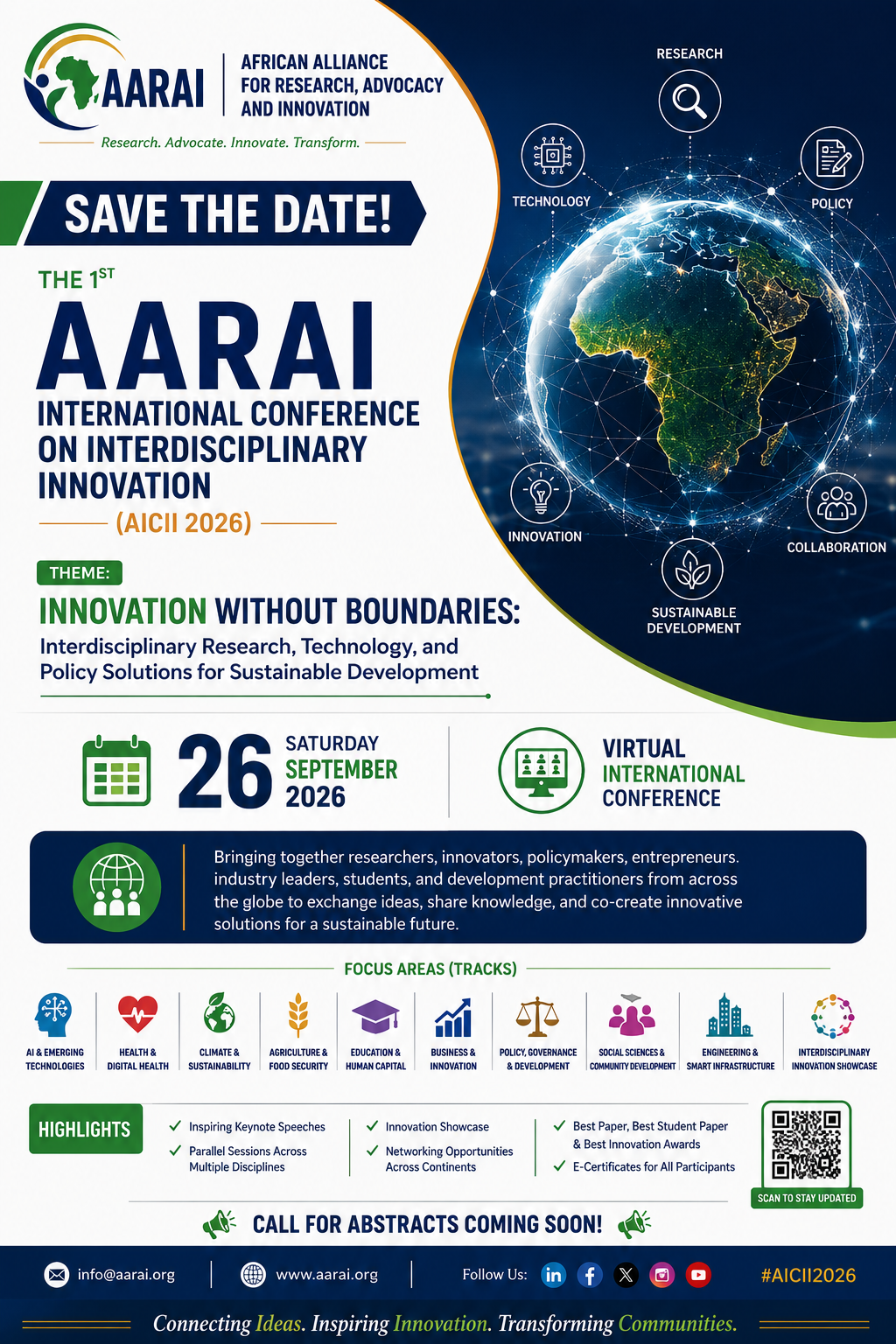
Congratulations to the organizers of AICII 2026 for creating a global platform that promotes collaboration among researchers and innovators. Conferences like this are essential for advancing scientific discovery, fostering interdisciplinary partnerships, and developing sustainable solutions to global challenges. I look forward to the impactful discussions and innovations that will emerge from this event.
Thanks so much Odontimi for appreciating our efforts. Thanks also for your kind and motivating words. Together, we can build the next generation of scholars where no one feels left out. Let us keep working together. Together, we build.
If artificial intelligence can provide answers in seconds, what should education focus on teaching in the years ahead?
Answer: According Someone I deeply respected and I quote, “AI without NI is useless,” where NI stands for Native Intelligence. That simple statement carries a profound message. Meaning, even if AI can provide answers in seconds, it cannot replace curiosity, wisdom, character, creativity, experience, or sound judgment. Though accessing information is becoming easier than ever with the help of AI, the ability to think critically, ask meaningful questions, evaluate evidence, solve complex problems, communicate effectively, collaborate with others, and apply knowledge ethically remains unique with humans. AI is a powerful tool, but its true value depends on the native intelligence guiding it. The future of education and innovation should not be measured by how much information we can access, but by how wisely we interpret, apply, and use that knowledge to solve real-world problems and create meaningful impact. In the age of AI, our greatest advantage will not be artificial intelligence alone, but the strength of our native intelligence working alongside it.
That’s fantastic. We need to engaged AI differently!